
Ativan Half Life (Lorazepam): How Long It Stays in Your Body








Table of Contents
- Ativan (lorazepam) has an average half-life of about 12 hours, and most of the drug is eliminated within 2 to 3 days, though this can vary by individual.
- Drug detection times differ by test type, with urine tests detecting lorazepam for several days and hair tests potentially detecting it for up to 90 days.
- Age, dosage, frequency of use, liver and kidney function, and other medications all influence how long Ativan stays in the body.
- Lorazepam carries a risk of physical dependence and withdrawal, particularly with long-term or high-dose use.
- Mixing Ativan with alcohol, opioids, or other depressants significantly increases the risk of respiratory depression and overdose.
This information is for educational purposes only and is not intended to be used as medical advice. See your healthcare provider for individual care.
Ativan is the brand name for lorazepam, a benzodiazepine medication commonly used for anxiety, seizure control, and other conditions. It is available as oral tablets, an oral concentrate solution, extended-release capsules, and injection. Questions about the Ativan half-life often arise when people are concerned about the safety of their use, potential side effects, drug testing, or planning for treatment.
It is critical to understand that the body has a complex biological system through which a medication passes and is eliminated. Thus, it’s crucial to distinguish between half-life, duration of clinical effect, and detection time, especially for those seeking detox, short-term inpatient care, medication-assisted treatment, or intensive outpatient care.
We at Aura Recovery believe that providing a clear and compassionate understanding of these terms will help to facilitate healing for individuals and their loved ones.
What Is Ativan (Lorazepam)?
Ativan (lorazepam), a benzodiazepine, is classified as a schedule IV controlled substance [1] under the Drug Enforcement Administration (DEA), indicating that there is significant risk for physical or psychological dependence or addiction to lorazepam, especially when it is used long-term (more than 2-4 weeks), or when misused.
Lorazepam acts on the gamma-aminobutyric acid (GABA) receptors in the central nervous system (CNS), which increases the calming effect of the neurotransmitter [2] GABA, resulting in relief from anxiety, relaxation of muscle tension, and, in cases of seizure activity, stopping the seizure.
Indications for use for Ativan include:
- Short-term treatment of anxiety disorders
- Treatment for acute seizure activity or status epilepticus
- Sedation before procedures
- Off-label use for insomnia or agitation
Understanding Half-Life
How Half-Life Works
Half-life is the time it takes for the concentration of a drug in the body to decrease by 50%. In simple terms, the half-life helps prescription providers understand how long the medication remains effective and how often it should be administered. However, it is essential to note that half-life does not indicate when the drug is no longer active.
Ativan Half-Life Range
Typical lorazepam half-life ranges between 10 and 20 hours in healthy individuals, with an average of about 12 hours. However, the clinical consensus is that people may exhibit variability, with potential half-lives ranging from 8 to 25 hours [1].
Lorazepam is metabolized in the liver by glucuronidation, producing an inactive metabolite, lorazepam glucuronide, with an approximately 18-hour half-life.
How Many Half-Lives Until a Drug Is Gone From Your System?
Generally, it takes five half-lives for a medication to be mostly eliminated from the body. With Ativan, that means that approximately 60 to 72 hours after the last dose, most of the drug is out of the body.
This is clinically relevant in the planning [4] of detoxification, adjusting dosages, and transitioning from the detox phase to addiction recovery.
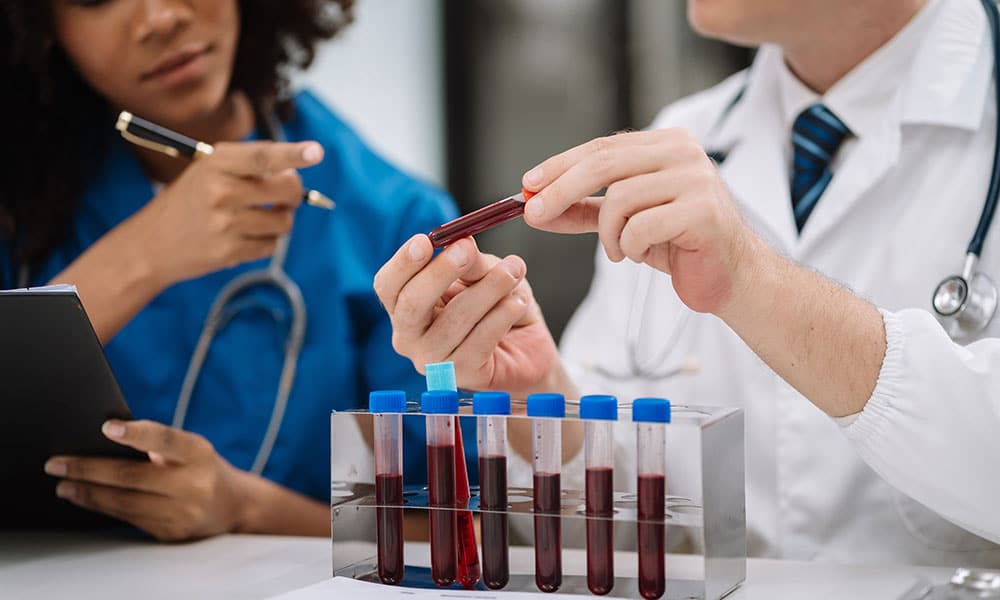
How Long is Lorazepam Detectable?
The length of time Ativan is detectable will depend on drug testing methods and drug-testing purposes.
Blood
In blood, lorazepam may remain detectable for anywhere from two to three days following the administration of the last dose.
Urine
Urine is the predominant specimen used for drug screening. According to the Mayo Clinic, lorazepam, as well as all of its metabolites, can typically be detected in urine for between 4-6 [5] days following the last dose taken; however, if a higher dose is used or if dosing of the drug is repeated multiple times, detection time may increase.
Saliva
Saliva is also used for drug screening, but it has a shorter detection window than urine. Lorazepam, the active ingredient in Ativan, can typically be detected in saliva for approximately 8-24 hours after a single dose. The detection time increases with regular use of the drug.
Hair
The detection window for lorazepam in hair samples is the longest; Ativan may remain detectable in hair samples for at least 90 days after the last [6] dose, although hair testing is less common in clinical settings compared to testing via urine or saliva.
Factors That Affect Elimination and Half-Life
Physiological Factors
Specific physiological and medical factors can affect how quickly or slowly lorazepam is eliminated from the body. Age has a marked effect on lorazepam metabolism [4]; older people tend to metabolize medications more slowly than younger individuals, which can increase the half-life of lorazepam. Additionally, individuals with greater body fat may experience variations in the distribution and elimination of Ativan, with longer detection times.
Liver and kidney function are very important for the elimination of Ativan. Lorazepam is metabolized in the liver and is excreted through the kidneys. When either liver or kidney function is impaired, it can slow down the elimination of lorazepam from the body.
Dosage and Frequency
Increasing the dose of Ativan increases the level of Ativan in the body. For example, the 1 mg Ativan half-life is within the normal range for a single dose, but if Ativan is taken daily or at greater doses, it will remain in the body for a longer period.
Drug Interactions
Many medications that can inhibit glucuronidation will slow the metabolism of lorazepam. Concomitantly, using lorazepam along with other CNS depressant medications can lead to increased effects and increased risk of misuse..
Genetic and Metabolic Variability
Individual differences in how Ativan is metabolized are related to both genetic differences and metabolic variations. This explains why people may react very differently to Ativan.
Clinical Effects vs. Residual Sedation
Duration of Therapeutic Effects
The peak effect of an oral dose of lorazepam occurs 1-3 hours post-administration, and the therapeutic effects of lorazepam last approximately 6-8 hours [2].
Next-Day Sedation and Residual Impairment
Many people who have used lorazepam report feeling drowsy or having residual sedation for some time after a single dose. Individuals with an increased body mass index and/or individuals taking a dose greater than 1 mg often report greater amounts of residual sedation.
Safety Considerations
Dependence and Withdrawal
When dependence to lorazepam has developed, the abrupt discontinuation of the drug could result in withdrawal symptoms that include (but are not limited to) anxiety, insomnia, and tremors; in severe cases, withdrawal symptoms may lead to seizures. At times, the safest approach to management of withdrawal symptoms is through medically monitored detoxification.
Combining Ativan With Other Depressants
Using Ativan with other depressants, such as alcohol or opioids, can increase the potential for overdose with respiratory [1] depression, which consists of shallow, slow breathing that leads to reduced oxygen within the body. Respiratory depression is a common cause of overdose-related emergencies.
Special Populations
Certain special considerations are needed for pregnant women, as well as for older adults and those with hepatic impairment. Dosing for these special populations may need to be adjusted, or alternative treatment options may need to be recommended.
A Compassionate Note on Treatment
Helping others who are experiencing difficulties associated with Ativan use is a compassionate act. Understanding how this medication affects the body is only part of addressing the issues related to Ativan use. Aura Recovery offers medically supervised detox, needs-oriented inpatient care, and continuing care options through outpatient programs. You are not alone, and there are resources available to assist you.
Aura Recovery Editorial Guidelines
At Aura Recovery, we take your health and wellness seriously. We have a thorough process in place to ensure the integrity of information that is displayed on our website. All content published to our site undergoes a rigorous medical review by a doctorate level clinician to ensure medical accuracy.
Read More About Our ProcessFrequently Asked Questions
Sources

© 2026 Aura Recovery Center. All rights reserved. - Privacy Policy